

Freelin-Wade Polyurethane Tubing
If inflexibility, cracks, and punctures have ever plagued your tubing, then it’s time for you to switch to polyurethane. PUR tubing provides excellent flexibility and resists the kinds of damage that can lead to dangerous leaks.
Freelin-Wade began manufacturing PU tubing in 1980, and Fre-Thane® remains our core product to this day. It is available in 28 in-stock colors, as well as a virtually infinite number of custom color variations. Fre-Thane® polyurethane tubing is Freelin-Wade’s most versatile product, with more options and variations available than with any other tubing option. Additionally, Freelin-Wade is capable of producing polyurethane tubing to fit your exact specifications.
Contact us today with any questions that you may have regarding our PUR tubing products.


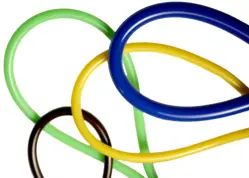


Polyurethane Tubing Product Offering
Multibore Polyurethane Tubing
Our 85A and 90A multi-bore tubing is produced as a single extrusion, which provides a sturdier bond between the bores than multi-color ribbon (MCR) tubing. This process requires that all bores be produced in a single color.Static Dissipative PU Tubing
Freelin-Wade’s static dissipative 90A poly tubing protects circuit boards and other sensitive electric components.Multi-Colored Ribbon PU Tubing
Our multi-color ribbon tubing is the solution you need for any application where you need to route two or more lines. It offers faster installation times and eliminates the need for spiral wrap or jacketing.Polyurethane Flexible Hoses
Flexible plastic hoses are built with specialty materials such as reinforced polyurethane (PUR) that provide extra resistance to abrasion, oils, and fungus while maintaining sustained flexibility even in extreme temperatures.Fre-Thane® Polyurethane Coils
Fre-Thane® polyurethane coils possess outstanding memory, a soft feel and superior flexibility. These coils are extraordinarily tough and resistant to abrasion, overstretching, kinking and repeated flexing.- Fre-Thane® Single Tube Polyurethane Coils
- Metric Fre-Thane® Single Tube Polyurethane Coils
- Flexcoil® Polyurethane Spiral Coils with Fittings
Custom Polyurethane Tubing Options
Freelin Wade is capable of producing polyurethane tubing to fit customers' exact specifications. No matter your application, we have the right polyurethane tubing for your needs.Why Choose Freelin-Wade For Fre-Thane® PU Tubing
Our Ether-based Fre-Thane® is our most versatile tubing. Highly flexible with excellent memory, it has the most variation possibilities of any of our tubing and is available in a variety of colors. It is available in tubing, self-storing retractable coils, multi-tube bonded MCR, and our industry leading Flexeel® hose.Freelin-Wade’s Fre-Thane® is naturally anti-fungal, has a high resistance to abrasion and water damage, while being highly flexible and kink resistant. Its most notable quality is its “memory.” FreThane® will stretch and flex but always return to its original shape. Freelin-Wade began manufacturing polyurethane tubing in 1980.
If your project requires standard or custom tubing, Freelin-Wade can deliver. With over 45 years of industry expertise, we take pride in providing customers with the highest quality, innovative plastic tubing they need for their application requirements. We stock more than 4,000 items ready to ship within 48 hours and support virtually any industry.
Additional PU Tubing Features
Some of the other features and benefits associated with our PU tubing, include:- Low gas permeability, extractables and compression set
- Resistant to chemicals, water, fuel, oil and fungus
- Transparent and opaque colors
Fre-Thane® Polyurethane Pneumatic Tubing Specifications
Our Fre-Thane® PU tubing is available in a wide variety of colors, sizes and hardness values. The hardness value of PUR tubing is measured by the plastics resistance to indentation. Fre-Thane® tubing is measured on the Shore® A scale, which is used for harder plastics. The higher the number on the scale, the harder the plastic is for that product. For example, our Fre-Thane® 95A tubing is harder and more durable than our Fre-Thane® 90A tubing. The working pressure of PU tubing increases as the hardness value of the tubing increases.If inflexibility, cracks, and punctures have ever plagued your tubing, then it’s time for you to switch to polyurethane. PUR tubing provides excellent flexibility and resists the kinds of damage that can lead to dangerous leaks.
Ester-based vs. Ether-based Polyurethane Tubing
From the user’s standpoint, ester-based polyurethane tubing is less expensive and provides slightly better fuel and oil resistance; however, it degrades more quickly when exposed to moisture. On the other hand, ether-based tubing also resists fungus growth and it also reduces the chances of deterioration due to contamination or brittleness.Chemically, both ester-based polyurethane pneumatic tubing and ether-based Fre-Thane® tubing are made from different polyol alcohols that cause similar, but different, reactions in the isocyanate. Both products are commonly found throughout the industrial marketplace.
Contact Us Today for High Performance Wholesale Polyurethane Pneumatic Tubing
If your application requires polyurethane tubing, make Freelin-Wade your first call, or contact us for more information on any of our PU tubing products.